




max_pershin
-
Iscritto il
-
Ultima visita
Risposte pubblicato da max_pershin
-
-
In any case Alfa Romeo will be with Front wheel drive. Domenico Chirico wrote about it in his book and even with a more then three marketing plans for Alfa (alone, with Ford, with FIAT).
But question isn't in front wheel drive, but how this conception is realizing.
This is real drawing of FWD Alfa Romeo dated 01/04/1975, twelve years before FIAT

-
-
Inviato ·
Modificato da max_pershin

I think the price will be next
Segment B - 18000-25500
Segment С - 20500-31000
Segment D (3 models) - 25500-36500
Segment E - 29500-41000
Specialites 1 (it might be C-SUV or Mito GTA?) - 27000-32000
Specialites 2 (it might be Spider) - 37500-42000
Specialites 3 (it might be 4C) - 42000-47000
-
We can find some information about future price and models for Maserati and Alfa Romeo in this presentation
-
Paolo, I think your designs are belong to V10 Coupe. Proportions of car look like the rear wheel drive. And very long bonnet for bid engine.
What's the origin of designs? CS?
-
The origin of Super Spider's drawing is from Centro Stile AR. I don't know nothing about maquette.
-
Ragazzi, non per resuscitare un topic vecchio, ma sono curioso di sapere se esistono dei bozzetti o delle maquette dell'Alfetta berlina? Ho provato a cercare qualcosa ma non sono riuscito a trovare nulla...

-
-
Guarda cosa vado a ripescare.... però è necessario perchè oggi c'è la possibilità di chiarire un dubbio.Tanti tanti mesi fa (direi anni) in questo topic postai le foto di un'Alfa 90 (targata) con uno strano kit aerodinamico, che Gente Motori aveva presentato negli anni '80 come una versione super-pepata cui Alfa Romeo stava lavorando.Venni giustamente ripreso dal Fusi (chissà se mi leggerà) perchè un'Alfa 90 con tanto di portatarga Rotondi non poteva esser mica tanto prototipo... però dopo quello la faccenda non era stata chiarita. L'altro giorno, in uno di quei casi in cui le cose ti vengono in mente a catena, una dietro l'altra, stavo cercando una cosa e ne ho trovata un'altra, che mi ha fatto venire in mente un'altra cosa ancora, che per associazione di idee (lo so, è un casino, dev'essere l'aria che si respira nella caverna, non pretendo che mi capiate
 ) mi ha fatto ricordare che ai tempi delle superiori avevo trovato delle foto, messe poi via, a colori, che mostravano questa 90.Sono andato a cercarle e, incredibilmente, le ho trovate. Con gioia ho scoperto che ai tempi mi ero preso la briga di infilarci assieme qualche appunto, scritto su un foglio dei quablock , che spiegava che 90 era (non ricordo minimamente dove avessi pigliato le info o chi me ne avesse parlato mostrandomi i ritagli di foto). Quindi stasera possiamo dire che questa...
 era un'Alfa 90 preparata dalla Saxxon Automobili di Milano. Nata dalla volontà dell'ingegner Gianni Marelli, ex Autodelta, che ai tempi stava collaborando con il team CART di Mario Andretti e la Zakspeed di F.1.Nei ritagli di tempo egli si era dedicato alle elaborazioni su base 75 e 90, e dopo alcune personalizzazioni e kit estetici, si era dedicato al potenziamento della meccanica.L'elaborazione era piuttosto spinta, caratterizzata dal montaggio di un turbocompressore KKK raffreddato ad acqua, con intercooler, che faceva salire la potenza a 188 cavalli capaci di portare la 90 a 228 km orari di punta massima.Per consentire un exploit del genere il lavoro fu complesso sia sul motore che sulla carrozzeria, soprattutto per posizionare più grandi organi di raffreddamento. In più, oltre all'assetto fatto di gomme e barre speciali, si poteva montare a richiesta un impianto frenante a dischi ventilati con pinze di tipo F.1, e serbatoio carburante ed impianto anticendio sempre ispirati alle specifiche della massima formula. In questo caso i prezzi salivano parecchio: orientativamente il kit completo veniva a costare dai 16 ai 20 milioni di lire, mentre per il solo motore la cifra richiesta era di otto milioni. Il lavoro poteva essere effettuato direttamente nell'officina Saxxon di Milano, in meno di quattro settimane. Ecco una foto del 4 cilindri pompato. In primo piano, sulla sinistra, il cassoncino di aspirazione in fibra di carbonio. Sulla destra, il turbo KKK con wastegate.
  La 90 è la stessa delle foto dei tempi di Gente Motori. Non so dire se fosse un esemplare di un privato o il prototipo realizzato da Marelli, ma di certo l'Alfa non c'entrava nulla in via ufficiale. Non stiamo quindi parlando di un muletto Alfa del passato, ma ho inserito qui l'aggiornamento perchè proprio in questo topic avevamo parlato della misteriosa 90 dalla strana mascherina. GTC
 -
-
Ma infatti...ma dove s'è visto mai derivare un motore da corsa da un PRV!
Are you serious?
Do you remember Renault Alpine A310 V6, Venturi 400GTR and 600LM for Le Mans, and of course WM! Please, try to find information about WM Peugeot 88
 408 km/h at the Le mans is it enough for you Or 417 km/h of the maximum speed?
-
Off
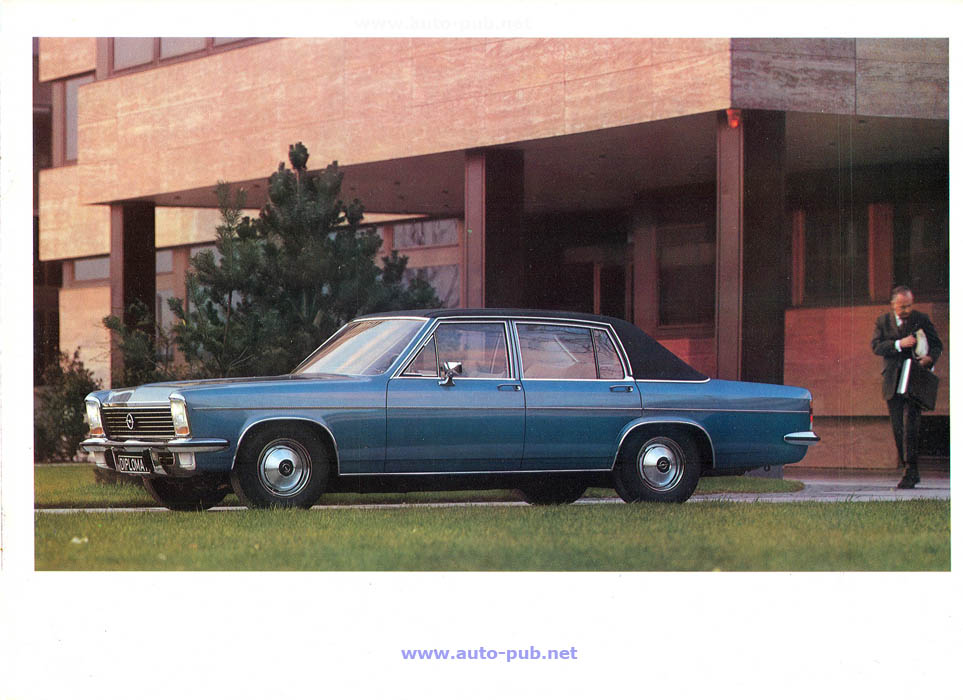
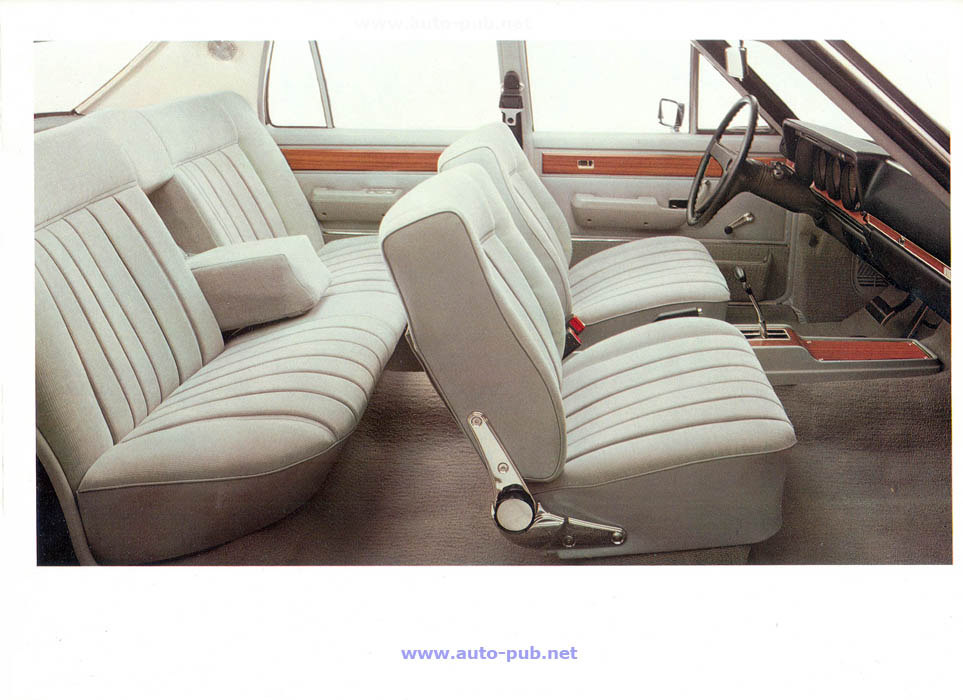
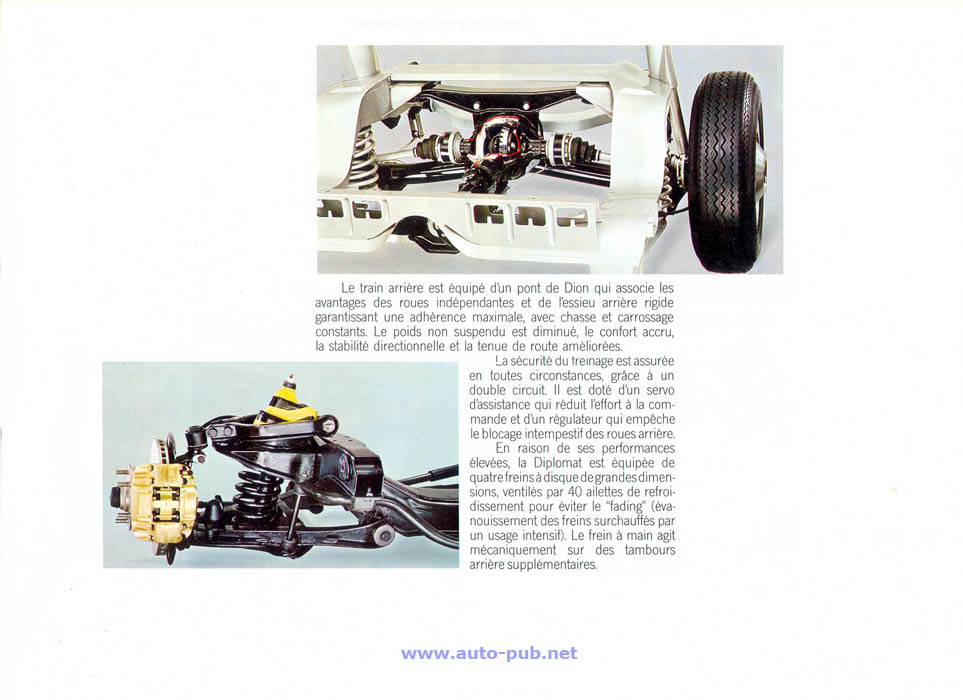
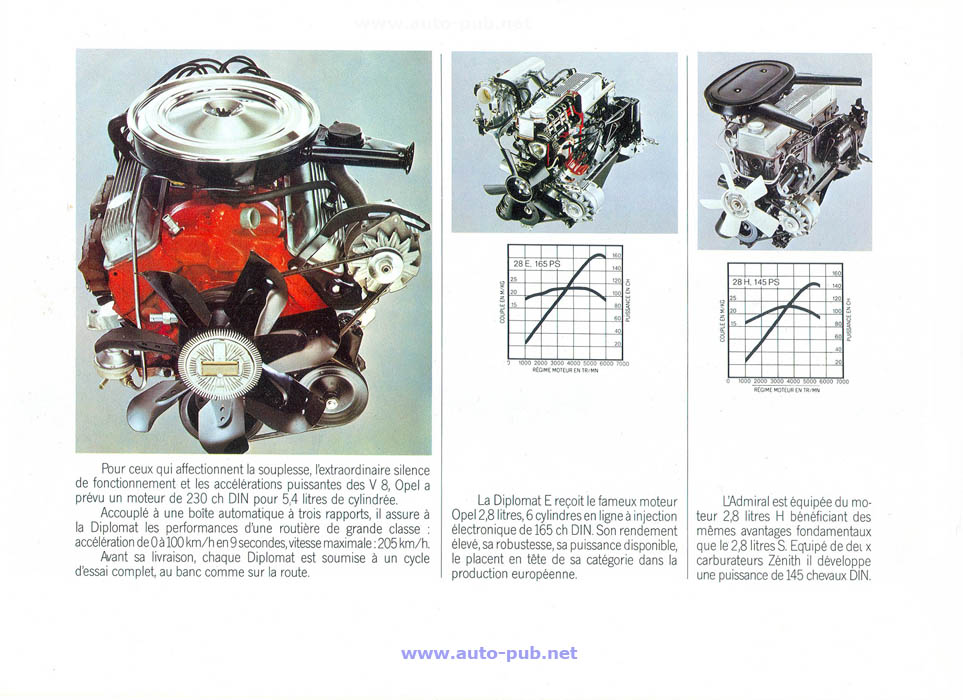
For me the one of the most interesting berlina from 70th was Opel Diplomat/Admiral.
V8 from Corvette or L6 2.8 with carbs or fuel enjection , De Dion rear suspension and automatic gearbox. It was real premium!
-
Tra parentesi , il v8 montreal ce l'avevano ancora....potevano metterci quello ( magari cambiando l'iniezione )
-
Inviato ·
Modificato da max_pershin
Guys, I have one question, what's more reliable source QR or Centro Documentazione Alfa Romeo?
This is full article about DTM-ITC from closed Alfawiki, alfisti.com, the one of the most reliable source about AR ever
DTM - ITC
After a thrilling 1992 racing season when the 155 GTA cars dominated the Italian SuperTurismo championship, Alfa Corse decided to step up its game in 1993 by developing various track versions of the 155. Its most ambitious goal was the DTM (Deutsche Tourenwagen Meisterschaft), the German touring championship, an extremely competitive event with a huge public following (an average of 62,800 spectators in 1993).
THE CAR
Taking advantage of the adaptation possibilities granted by the generous D1 category regulation, the standard production 155 was drastically revised. The compact 60° V6 dry sump light alloy engine with a capacity of 2498 cc (93 x 61.3) and cylinder head with four valves per cylinder (intake in titanium), was able to develop 420 HP at 11,800 rpm and a maximum torque of 30 kgm at 9,000 rpm with a weight of just 110 kg. On the 155, it was arranged longitudinally overhanging the front axle, supported by a sub-frame.
The six-speed gearbox was connected to the power unit by a magnesium casting, which also incorporated the oil reservoir (8 litre) and the front differential. The transmission was four-wheel-drive with epicyclic transfer box, viscous coupling and self-locking sliding front and rear differentials. Drive torque distribution was 33% to the front and 67% to the rear.
The vehicle body measured 4,576 mm in length, 1,750 mm in width and 1,410 mm in height with a weight of 1,040 Kg and weight balancing of 50% over both axles. The body was made out of carbon fibre and the frame was strengthened by a cage-type roll-bar. As on the 155 GTA, the suspension configuration was a McPherson on all four wheels, with elliptical cross-section tubular lower wishbones and trailing arms on the rear end for adjusting toe-in with stabiliser bars adjustable by the driver.
From the second race, the 19’’ wheels were abandoned in favour of 18’’ wheels that were better suited to the numerous town routes. The injection system was also improved during the racing season, being fitted with two injectors per can, and a new sequential gearbox was adopted.
THE VICTORIOUS DEBUT. 1993
The Alfa Corse team, managed by Giorgio Pianta, therefore fielded two 155 V6 TI cars, driven by Nicola Larini and Alessandro Nannini. Another pair of twin cars were also driven, for the Schubel team, by Giorgio Francia and Christian Danner.
The car's victorious debut at the Zolder track was simply the first step towards Nicola Larini winning the title, beating the current champion Klaus Ludwig, driving for the imposing Mercedes mega-team. Larini notched the highest number of victories in the DTM's history, no fewer than 10 in 20 races, joined by another two wins obtained by Nannini and a non-league race win in Donnington.
1994 SEASON
Enthusiasm for the win in 1993 and excellent sales feedback in Germany for the 155 cars prompted Alfa Corse to continue developing the car for the following season. The car was improved in every part: the power unit was lightened, lowered and equipped with air-controlled valve return, which bought benefits, particularly in terms of power delivery. The car body was lowered by no less than 60 mm and its aerodynamics were significantly altered.
The biggest changes were, however, linked to an increase in the use of electronics: a special ABS, developed by the American Kelsey-Hayes (an optical speed scanner prevented the simultaneous blocking of all four wheels in a four wheel-drive configuration: racing conditions can mislead a normal ABS not built for the stresses of the track, where decelerations of more than 2 g are possible) and an electronically-controlled active suspension system developed in conjunction with TAG Electronics. On the safety front, the normal equipment was joined by a new airbag on the drivers steering wheel.
Five new 155 cars were lined up at the beginning of the championship: two official Alfa Corse cars driven by Larini and Nannini. Another three managed by Schubel Engineering for France, Danner and the Danish new-entry Chris Nissen. The six 1993 cars were leased to private individuals. Nannini dominated the first part of the championship, winning seven out of the first 10 races, but the veteran Ludwig, with his improved Mercedes, got his own back and was awarded the driver's title, even though Larini was not short of successes. At the end of the season, he was also joined by Stefano Modena, making Alfa the make that scored most victories.
The 1995 SEASON (DTM and ITC)
The popularity of D1 class cars (Class 1 for the FIA) had risen considerably and the number of non-league events outside the normal DTM circuit was growing. In 1995, there were no fewer than five, grouped by the FIA into the new ITC (International Touring Car series) championship. At the same time, the regulations had also become less strict, meaning that the already-extreme touring cars now retainined only the silhouette of the original model: the chassis' and suspensions were redesigned.
At the championship, Alfa Romeo lined up six official cars and three for private individuals. Larini and Nannini with the Alfa Corse-Martini Racing team, Stefano Modena and Michael Bartels for Euroteam, Michele Alboreto and Christian Danner with Schubel. The first part of the championship was beset by delays in developing the new car (the “Step 2”) but at last it was ready. The season brought slim pickings and concluded in Magny-Cours with the ITC title going to the Mercedes driven by Bernd Schneider, already the DTM champion.
1996 SEASON (ITC)
1996 saw the DTM disappear to be replaced by the ITC, which had now become a world championship with 13 double events under its belt: opening in Hockenheim and closing in Suzuka. Alfa Corse fielded no fewer than eight official 155 cars: Larini e Nannini (Alfa Corse-Martini Racing), Giancarlo Fisichella and Christian Danner (Alfa Corse-TvSpiefilm), Stefano Modena, Michael Bartels, Gabriele Tarquini and Jason Watt (Alfa Corse-Jas).
The 1996 car was a further development of the ill-fated Step 2: the track was widened by 30 mm because the standard production car had also been widened. The tank arrangement and aerodynamic configuration were also altered. The transmission was improved with the adoption of a sophisticated X-Trac transmission, while the power unit was further improved to the threshold of 460 HP. The electronics was upgraded to a new Magneti Marelli system.
During the championship, Nannini was still driving for Alfa Romeo and the Nurburgring debut of the new Lancia-based 90° 6V engine (2498 cc, 98X55,2 mm, 490 HP at 12,000 rpm) put him back in the running for the title. At least until the penultimate event in San Paolo, where wins by Nannini and Larini were not enough to snatch the title from the Opel Calibra driven by Manuel Reuter.
Already in Magny-Cours Alfa Romeo had stated its intention of abandoning the championship. This decision was soon followed by Opel, thus writing the last chapter in the short yet exciting era of the ITC. Escalating costs (following liberalisation of the electronics and suspension, Mercedes soared to a new level of technology in 1996 with the wholesale adoption of composite materials for the chassis) and failure to achieve proportional feedback in the media and market put a premature end to the championship.The 1996 cars therefore represented the maximum flowering of technology applied to racing cars, which were allowed to develop virtually untrammeled in an era when even Formula 1 had adopted extremely strict regulations, particularly on electronics.
SOURCES
Centro Documentazione Alfa Romeo – Arese MI
Autosprint, annate 1970 al 1973 e 1976-2008
Il Quadrifoglio, annate 1966-1973 e 1983-2003
L’Alfa e le sue auto, Chirico, Milan, 2007
Quattroruote, annate 1956-2009
-
Inviato ·
Modificato da max_pershin
Actually on 155 V6TI was install a racing version of the V6 Busso. -
For 155D1 V690 Abarth used PRV (Peugeot-Renault-Volvo) engine block from Lancia Thema V6.
The Alfa 155 D2 had under the bonnet 164 4c Turbo engine block (Thema without balancing shafts) and 155Q4 head.
C.BLOCK 164 2.0 TU/C.HEAD 155 QUA 4 – 1'995cc
So, it was racing FIAT Tempra, not ALFA:)
-
 1
1
-
-
Qualcuno ha il libro citato da Max Pershin nel topic sulla 4C, "Alfa Romeo - la bellezza necessaria"? Se sì, scannerizzate, per favore, la pagina col disegno del Super Spider a motore centrale? Il libro è fuori catalogo.
-
Mid engined Alfa from the past:
512, 163, Scarabeo I (2 coupe and Spider), Scarabeo II (with De Dion rear suspension), 33/2, 33/2 Daytona, 33.2 Stradale, 33.3, 33TT3, 33 TT12, 33SC8, 33 TT12 Turbo, Alfasud Sprint Spider, Alfasud Sprint 6C, 177, 179, 179C, 179 Turbo, 182 (with carbon fiber chassis), 182 Turbo, 183, 184, 185, 184 4 cil. Turbo, FIAT Tipo Alfa Romeo (with 6c engine) - it was mule for future Super Spider (drawing of Spider we can find in ALFA ROMEO - LA BELLEZZA NECESSARIA book), Diva.
-
The original 8.32 was really four wheel drive.
Sorry, I missed topic, it was with longitudinal engine?
-
I think it wasn't 4WD, more probably 4WS.
There are some information about Thema from official sources, Centro Ricerche FIAT.
applicazione su Lancia Thema
1989: Allestimento su Lancia Thema di una versione prototipale di sistema informativo di bordo, basato sull'impiego di una CRT a colori come interfaccia per le funzioni di supporto alla guida e la gestione remota dei dispositivi di bordo (radio, TV, condizionatore, telefono cellulare)
1992: Prototipo Thema con sospensioni attive: applica il concetto sviluppato per le vetture di Formula 1 per migliorare sicurezza attiva e comfort sulle berline ad elevate prestazioni
-
-
dal televideo Televideo - Rai
[..]Soltanto sullo stabilimento di Melfi indica che l'investimento partirà presto.[..]
i due prodotti previsti nel 2014 dal PP in italia che siano la 500x e la jeppx?
sempre dal PP nel 2015 è prevista una nuova fiat importata da fuori emea dovrebbe essere il prossimo Freemont
-
Inviato ·
Modificato da max_pershin
I think very interesting information we can find on one of the last pages of PP. It's expected sales by years.
There are 17 new models (from 2012 to 2014) in the PP but sales in 2014 are growing only to 4,6-4,8 mln.
The difference of WW sales FIAT-Chrysler between 2012 and 2014 is only 400-600 thousand pieces.
-
I think for Alfa:
2013 - 4C, Mito and Giulietta restyling or MY
2014 - Giulia Berlina and Giulia SW
2015 - Duetto, Big SUV, Small SUV and Big Berlina
2016 - New MiTo, Coupe or New Giulietta


Curiosità: cosa avrebbe potuto fare AR nel 1987 se fosse rimasta da sola?
in Auto Epoca
Inviato
I can scan tomorrow all production plans from Chirico book, if someone want it