




4200blu
Utente Registrato
-
Iscritto il
-
Ultima visita
Tutti i contenuti di 4200blu
-
ADAC Testlabor Elektromobilität Il test si è svolto nel laboratorio di prova dell'ADAC Electromobility presso il Centro Tecnico ADAC di Landsberg am Lech. La camera climatica consente di testare i veicoli a temperature comprese tra -20 e +40 gradi Celsius. Davanti al banco di prova si trova un caricatore rapido Alpitronic HYC300, che può essere utilizzato per caricare le auto elettriche in corrente continua direttamente sul banco di prova. "Nel laboratorio di prova è installato un banco dinamometrico a trazione integrale (Horiba, Vulcan2), sul quale vengono simulati in modo riproducibile singoli scenari di guida, da cicli di prova standardizzati a percorsi di guida reali. I valori di resistenza alla guida (f0, f1, f2) di un veicolo sono elencati nel documento CoC ai punti da 47.1.3.0 a 47.1.3.2 e sono memorizzati nel banco prova. All'inizio di una prova, viene effettuata una regolazione del carico per adattare il veicolo a questi valori caratteristici. f0: la resistenza aerodinamica è indicata nel valore f2 e aumenta con il quadrato. Ciò significa che maggiore è la velocità, maggiore è l'aumento della resistenza aerodinamica che il banco prova esercita sul veicolo. Gli effetti del vento e delle condizioni atmosferiche, che influenzerebbero i risultati durante la guida su strada, sono esclusi dal banco di prova e tutti i veicoli hanno le stesse condizioni di prova." (ADAC)
-
-
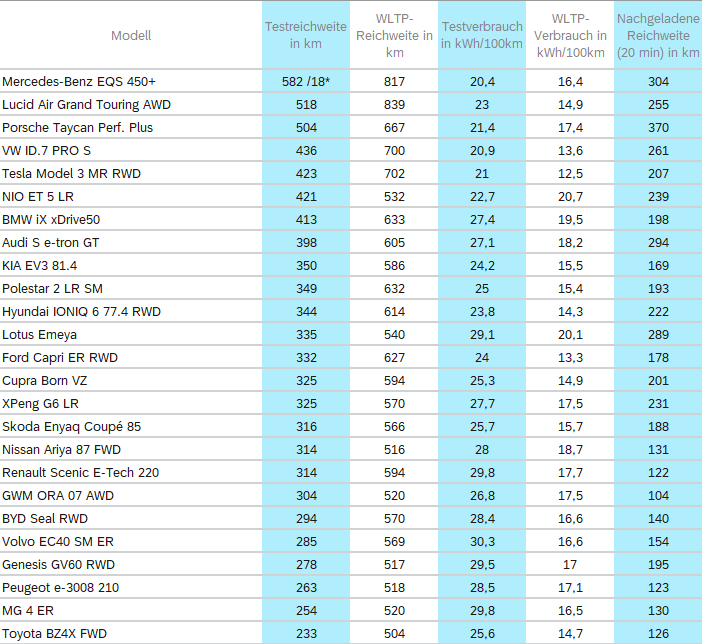
Grande prova invernale con 25 Bev diverse (per segmento e prezzo), fatta da ADAC Viaggio Monaco-Berlino a zero gradi su autostrada Percorso, impostazioni del veicolo, temperatura Il percorso dalla stazione centrale di Monaco alla stazione centrale di Berlino è stato registrato durante un viaggio di riferimento con un veicolo diesel. La velocità è stata impostata al massimo consentito. Dove non c'erano limiti di velocità, è stata utilizzata la velocità di riferimento di 130 km/h. Il viaggio si è svolto senza problemi, con poco traffico e nessun ingorgo. La distanza totale percorsa è stata di 582 chilometri e il tempo di guida puro è stato di 5 ore e 15 minuti, con una velocità media di 111 km/h per l'intero percorso. I dati registrati, ovvero il profilo di velocità e altitudine, sono stati inseriti nel banco di prova ADAC. La temperatura ambiente nella camera climatica è stata impostata a 0 gradi Celsius. La temperatura selezionata è leggermente inferiore ai valori medi della Germania in inverno ed è quindi rappresentativa di un viaggio invernale. Naturalmente, anche in inverno possono esserci giornate più fredde. Il riscaldamento è stato impostato sulla modalità Auto. I sedili del conducente e del passeggero anteriore erano riscaldati. I sedili, il volante e la radio riscaldati erano disattivati. La temperatura interna è stata misurata all'altezza della testa del sedile del passeggero anteriore e dovrebbe essere compresa tra 20 e 23 gradi. Se la temperatura non è stata raggiunta con la modalità Auto, il riscaldamento è stato regolato di conseguenza più alto. Il sedile del conducente è stato testato dall'ingegnere di prova ADAC, che ha guidato il percorso. Il sedile del passeggero anteriore è stato appesantito con sacchi di sabbia per attivare un sistema di riconoscimento del sedile del passeggero anteriore, che può influire sul controllo del riscaldamento. Procedura di prova Carica al 100% e precondizionamento dell'auto elettrica per 14-18 ore a 0 gradi Celsius. L'avviamento a freddo è stato effettuato deliberatamente senza condizionamento della batteria (caso peggiore). Se la batteria è ancora preriscaldata dalla rete elettrica, è possibile aumentare l'autonomia, cosa che di solito viene consigliata. Guidare fino a quando l'energia della batteria si è ridotta al punto da non essere più sufficiente per mantenere la velocità desiderata. Poi ricarica rapida con un Hypercharger Alpitronic da 300 kW. La curva di carica è stata valutata a partire dal 10% ed è stata determinata l'energia ricaricata in 20 minuti. L'eventuale condizionamento della batteria per la ricarica rapida non era attivo. Determinazione del consumo di energia per la distanza percorsa in base alla carica CC ricaricata. Questo include le perdite di carica CC. Conversione dell'energia ricaricata al caricatore CC per determinare l'autonomia ricaricata in 20 minuti. Risultati
-
-
New Maserati models in limbo after £1.2 billion investment written off Launch of MC20 Folgore and future EVs in doubt after Italian firm suffers sales slump in 2024 The decision from Stellantis – which also owns brands such as Vauxhall, Fiat and Jeep – comes amid slower than expected EV demand in the luxury segment as well as a collapse in overall demand at the top end of the Chinese market for global brands. Overall, Stellantis's profits fell by 70% in 2024, while Maserati's sales more than halved from 26,600 units in 2023 to 11,300 last year. Stellantis referenced “the cancellation of certain projects prior to launch” under the figures in financial documents published on 26 February, which Autocar understands is partly in reference to the axing of the Folgore electric version of the MC20supercar, which was due to be launched early this year. The cancellation has previously been referenced by Italian trade union FIM CISL. Autocar has contacted Maserati for further information. The pulling of investment also brings into question the electric replacements for the Quattroporte saloon due in 2028 and Levantelarge SUV in 2027. The electric Quattroporte had already been delayed from its planned 2025 launch. The combustion-engine versions of both models were axed this year. Stellantis chief financial officer Doug Ostermann told analysts on an earnings call that the company had to review Maserati’s model launch cadence, particularly in respect to EVs. “We have to recognise the dynamics in that business, particularly in the Chinese market, and our expectations in terms of how quickly that luxury market would transition to electrification,” he said. Maserati’s revival under Stellantis ownership was heavily underpinned by the shift to electric with a plan to phase out all combustion-engine models by 2030. The brand has already launched ‘Folgore’ electric versions of the Grecale mid-size SUV, Granturismo coupé and open-topped Grancabrio. Overall Maserati shipments more than halved in 2024 to 11,300. The brand lost €260 million (£215m) in 2024 after recording profits of €141 million (£117m) in 2023. Maserati’s problems echo those of the wider top-end sector, where even Porsche suffered a poor 2024 after being hit by both a decline in Chinese demand and slow sales of its Taycan electric car. Premium brands are heavily reviewing their global EV strategy by pivoting back more towards combustion engines after demand levels proved lower than expected. Chinese buyers are favouring local EV brands while the US market for electric cars is now a complete unknown after EV-sceptic Donald Trump was re-elected president. Maserati’s problems are a big concern to the local Italian unions, which have long been pressuring Stellantis to fulfil promises to flesh out the brand’s range and increase production. FIM urged Stellantis to clarify Maserati’s future at a planned meeting on 11 March after 2024 production fell 79%. “Maserati represents one of the most critical situations. Despite the quality and high-performance models, the brand suffers from errors and carelessness in terms of marketing,” FIM general secretary Ferdinando Uliano said in an interview with the union’s in-house magazine published on 26 February. “We can no longer waste time.” (autocar.co.uk)
-
-
-
-
-
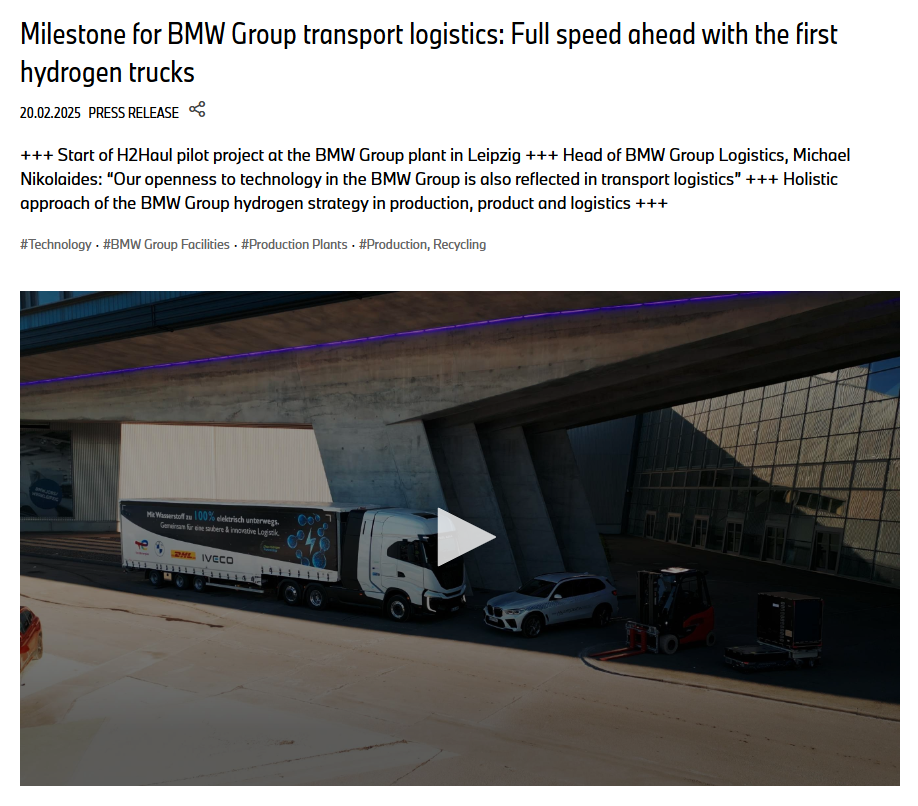
Munich , Leipzig . The BMW Group has acquired two zero-emission fuel cell trucks, as it launches a pilot operation as part of the European H2Haul project, which is aimed at promoting hydrogen mobility in freight transport. The two vehicles will run between Leipzig, Landsberg and Nuremberg, in order to trial the practicality of this technology. To allow serial operation, two state-of-the-art hydrogen fuelling stations are being built in Leipzig and Hormersdorf. They allow rapid refuelling with large quantities of hydrogen, which is crucial to the continuous use of fuel cell trucks in the logistics sector. The BMW Group is implementing the H2Haul project in cooperation with Iveco, DHL and TEAL Mobility. “In global logistics, it is important to select the right means of transport, in order to operate in a future-oriented and efficient manner. To this end, the openness to technology in the BMW Group is also reflected in its transport logistics. For the first time, hydrogen-powered trucks will now be used in serial operation for German automobile production. We have been working with our partners for several years to implement this pilot fleet. This project is an important milestone as we gain experience in serial operation and continue to advance this important technology,” says Michael Nikolaides, Head of Production Network and Logistics BMW Group. Two of 16 trucks subsidised in Europe will drive for BMW Group Logistics The aim of the H2Haul project is to test hydrogen trucks with fuel cell drivetrains under realistic conditions, and to investigate the important contribution they can make to decarbonising heavy traffic. Testing this technology will pave the way for the commercialisation of fuel cell trucks in Europe. Funded by the Clean Hydrogen Partnership, a total of 16 trucks will run in various European countries, including two IVECO S-eWay Fuel Cell trucks operated within Germany by BMW Group Logistics. The findings of the BMW Group when running the two trucks will help develop the technology to market maturity and pave the way for a wide-scale introduction in the road freight sector. Short refuelling times and longer ranges mean hydrogen trucks can represent an important addition to E-trucks, which are also in use at the BMW Group, on long routes. Another attribute worth emphasising is the flexible logistical operation of H2 trucks, without having to put a charging infrastructure in place or expand a network. BMW Group Strategy for Reduced Logistics Emissions Participation in the H2Haul project, with the practical use of hydrogen fuel cell trucks in long-distance and heavy transport, is part of the BMW Group Strategy for Reduced Logistics Emissions and an important step towards achieving the BMW Group’s own climate goals on the road to zero-emission transport logistics. The cross-departmental “Reduced Logistics Emissions” team develops concepts to reduce CO2 across all global BMW Group transport, whether by road, rail or ship. The team evaluates drive technologies, taking into consideration different future scenarios, with the goal being to make transport within the global production and distribution network zero-emission. Positive assessments lead to the implementation of pilot projects and the development of plant concepts, the emission data from which is then consolidated in order to allow a CO2 report. Additional use of H2 combustion engine trucks within the HyCET project As well as participating in the H2Haul project, the HyCET project to test trucks with H2 combustion engines was also launched under the consortium leadership of the BMW Group. As part of the HyCET project, two 40-ton trucks and one 18-ton truck will be used in BMW Group Logistics in the future. The project is funded by the Federal Ministry for Digital and Transport (BMDV). Affiliated partners in this project are DHL, Volvo Trucks, Deutz, KEYOU and TotalEnergies. By testing H2 fuel cells and H2 combustion engines at the same time, the BMW Group is also consistently following its approach to technological openness in the transport logistics sector. Compared to fuel cells, the combustion engine does have higher consumption. However, the similarity to the established diesel engine means it costs less to produce. The particularly low level of emissions produced by burning hydrogen means the H2 combustion trucks are classed as zero-emission vehicles in accordance with EU regulations. Both H2 fuel cell trucks and trucks with H2 combustion engines are used on the same BMW Group Logistics route and will use the same fuel stations. Comparing the two drive technologies will determine the best possible areas of application for the respective technology within BMW Group Logistics. Hydrogen vehicles also used in intralogistics in Leipzig Within the BMW Group, the Leipzig plant has for years played a pioneering role in the use of hydrogen in logistics. In 2013, the first indoor hydrogen fuel station in Germany was built on the grounds of the plant in Leipzig. Forklifts and tugger trains for internal plant logistics can be refuelled there. Over ten years later, the Leipzig plant possesses one of the largest fleets in Europe, with over 200 fuel cell-powered industrial trucks. Nowadays, five hydrogen fuel stations are located on the grounds of the plant, the newest of which allows fully-automated refuelling for the first time. Use of flexible hydrogen burners in the paintshop BMW Group Plant Leipzig is the first automobile plant in the world to operate a newly developed burner technology, which can use both natural gas and hydrogen, in its paintshop. Five bivalent, hydrogen-capable burners are currently used when applying the contrast roof paint on the MINI Countryman. Other burners in the paintshop are gradually being converted, so that there will be no need to use natural gas at all in the long term. This makes the Leipzig plant a pioneer in the automobile industry and takes another step towards reducing CO2 emissions. “Our vision for Leipzig is the extensive decarbonisation of production. Among other things, this can be achieved by replacing fossil fuels with hydrogen,” says Petra Peterhänsel, Head of BMW Group Plant Leipzig, describing the long-term orientation of the plant. First hydrogen-powered BMW production model in 2028 As part of its holistic approach and after the successful global testing of the pilot fleet of BMW iX5 Hydrogen vehicles, it is now preparing to start the series production of vehicles with hydrogen drivetrain in 2028. The series production models will be integrated into BMW’s existing portfolio, i.e. BMW will offer an existing model in an additional hydrogen fuel cell drive system variant. As fuel cell technology is another electric vehicle technology, the BMW Group explicitly views it as complementing the drive technology used by battery electric vehicles (BEV) and next to plug-in hybrid electric vehicles (PHEV) and internal combustion engines (ICE). (BMW Group)
 ....per questi 8,8% totale vuoi fare tre step di potenza per una seg-C? Hmmmmmmm......
- 552 risposte
-
-

- 3
-
-
- compass
- compass spy
- j4u
- jeep
-
Taggato come:
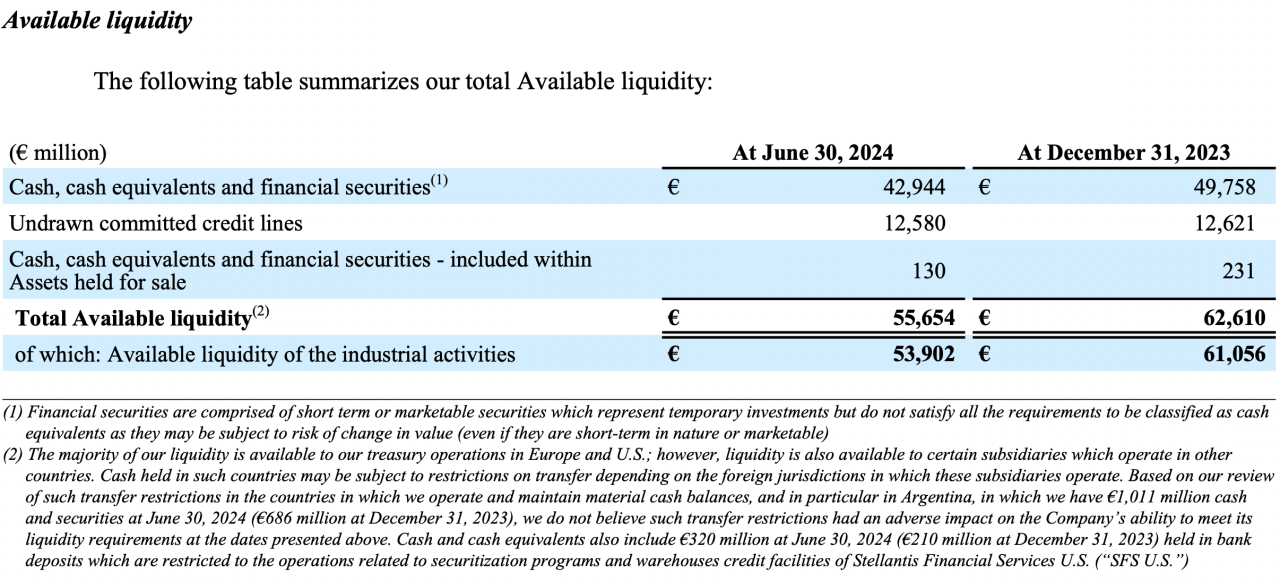
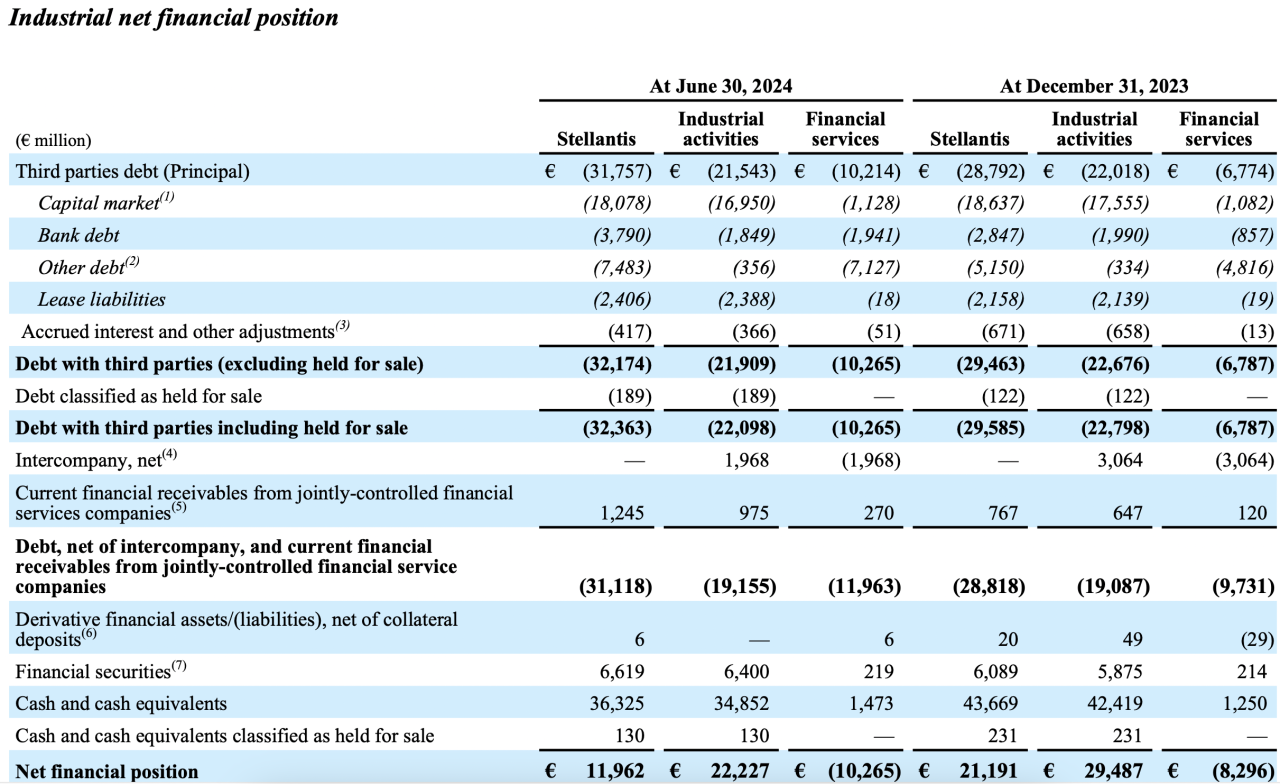
But none of the competitors has these bad relation between lost in revenue - lost in earnings plus lost in market share. The japanese and german OEM's have most of their problems/losses in chinese market, not in Europe and America like Stellantis. The problems of Stellantis are too much brands, too few precise brand profiles, too much plant capacity and an unefficient sales organisation - it's a reorganization case.La cassa e la liquidità sono due cose diverse. E come si può già vedere dal bilancio semestrale ufficiale, al momento stanno bruciando enormi quantità di denaro e sono anche lontani dall'avere più di 50 miliardi a disposizione. A metà anno era di appena 12Mrd netti e questa posizione si sarà nuovamente ridotta in modo significativo entro la fine dell’anno. https://www.stellantis.com/content/dam/stellantis-corporate/investors/financial-reports/Stellantis-NV-20240630-Semi-Annual-Report.pdf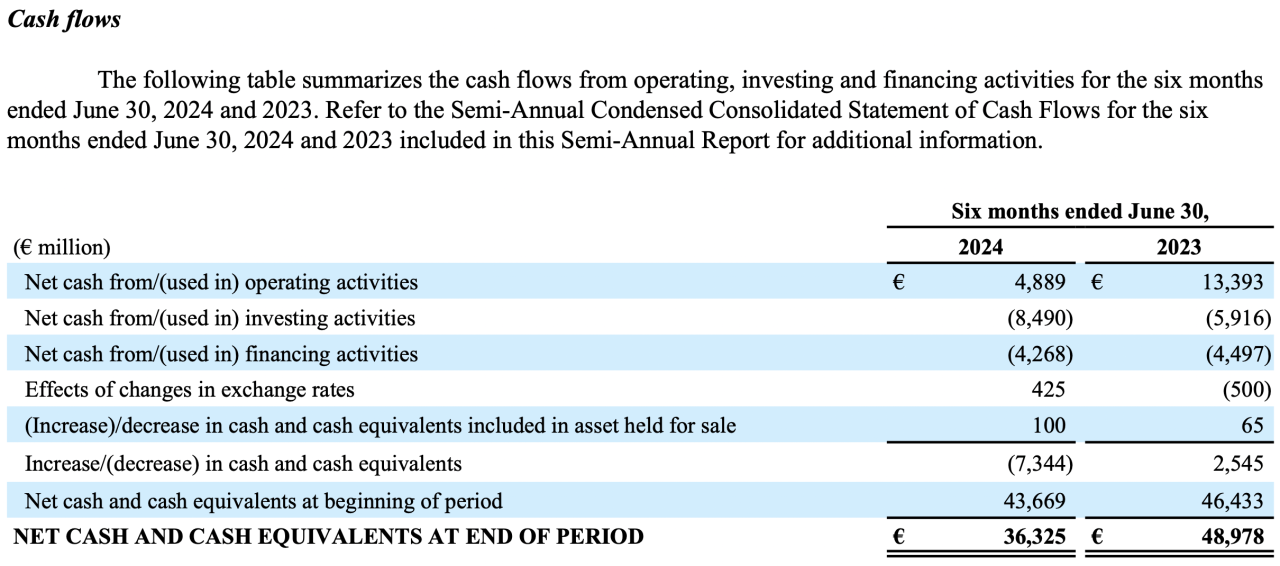
 Intervista di oggi: Il vicepresidente della Commissione europea Stéphane Séjourné intende presentare già la prossima settimana proposte concrete su come evitare alle case automobilistiche europee di incorrere in multe per non aver rispettato i limiti di CO2 più severi entro il 2025. “Stiamo esaminando diverse opzioni per trovare una soluzione rapida senza il coinvolgimento obbligatorio del Parlamento europeo e del Consiglio dei ministri”, ha dichiarato Séjourné alla Frankfurter Allgemeine Zeitung (edizione di giovedì). Il coinvolgimento del Parlamento, in particolare, potrebbe frenare la proposta, in quanto vi è una certa resistenza a ridurre gli oneri. Tuttavia, la Commissione non intende mettere in discussione i severi limiti di CO2 per il 2035, compreso il divieto di utilizzo dei motori a combustione, almeno non ancora. Tuttavia, la revisione dei limiti della flotta, che in realtà non è prevista dalla legge fino al 2026, sarà anticipata di un anno. “Quindi non avremo risultati fino al 2027, ma l'anno prossimo”, ha detto il francese. FAZ.de / Tradotto con DeepL