




4200blu
Utente Registrato
-
Iscritto il
-
Ultima visita
Tutti i contenuti di 4200blu
-
-
-
-
Ma non avrebbe una certa logica che, per finanziare i 13 miliardi di investimenti aggiuntivi annunciati negli Stati Uniti, fosse necessario risparmiare altrove? E come è possibile risparmiare somme così enormi se non riducendo la gamma di modelli da sviluppare in altre regioni, ad esempio in Europa?
-
-
Futuro della Lancia nel piano Filosa cosi??? ….Lancia, invece, rallenta la propria espansione. La nuova Ypsilon ha avuto un buon riscontro in Italia ma un’accoglienza tiepida all’estero. Per questo motivo i progetti di una berlina e di un crossover sono sospesi. Il marchio dovrà concentrarsi sul rilancio dell’immagine e sulla redditività prima di pensare a nuovi modelli........
-
-
..alta in vista di chi? Una ragazza che compra una Junior perche a lei piace di piu rispetto una Mokka e perche esiste in rosso molto carina?- pensi davvero che e interessata in una hypercar prodotto in 30 esemplari? Nemmeno sa che questa esiste. Azioni come queste sono completamente senza senso.
-
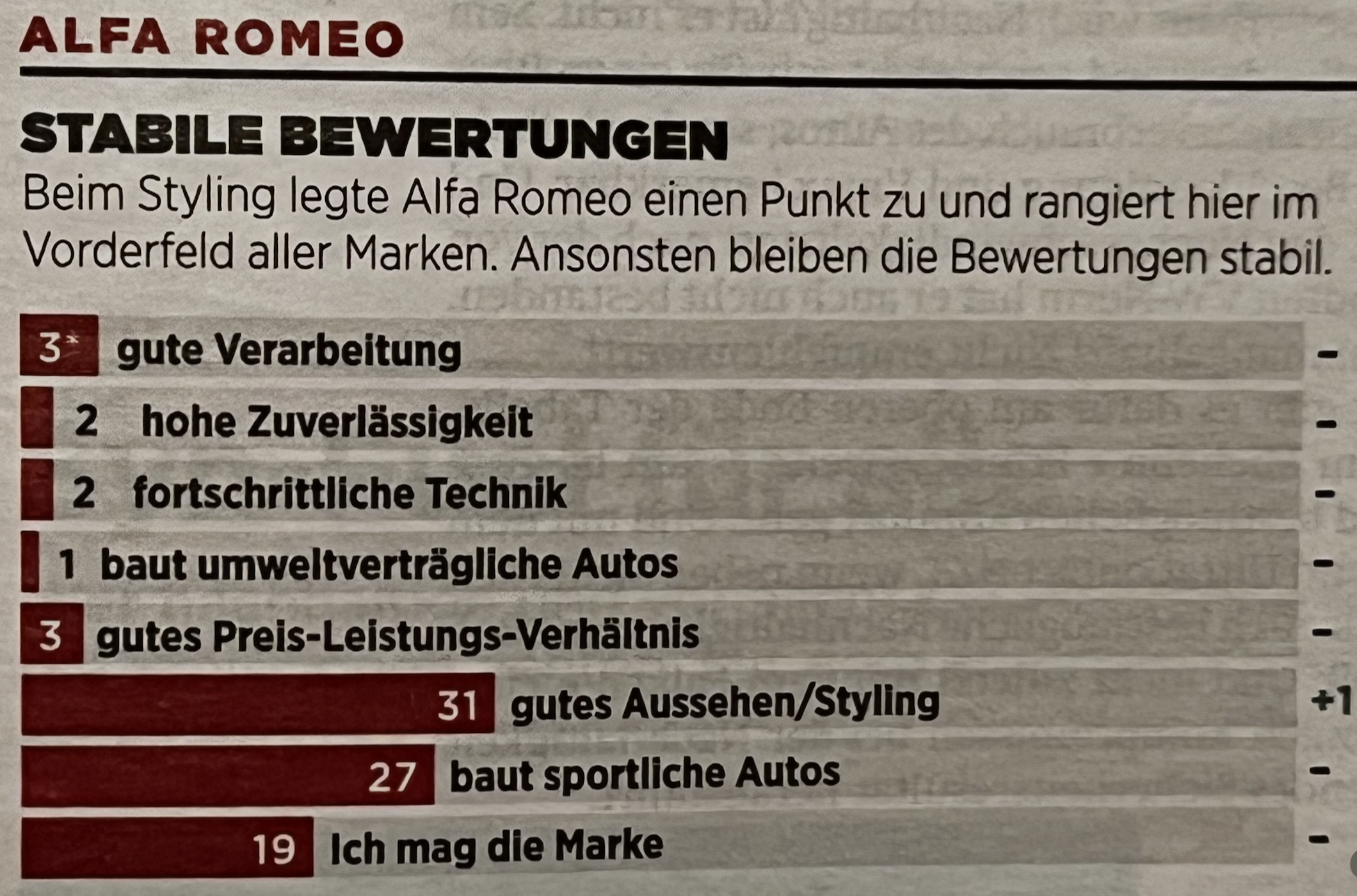
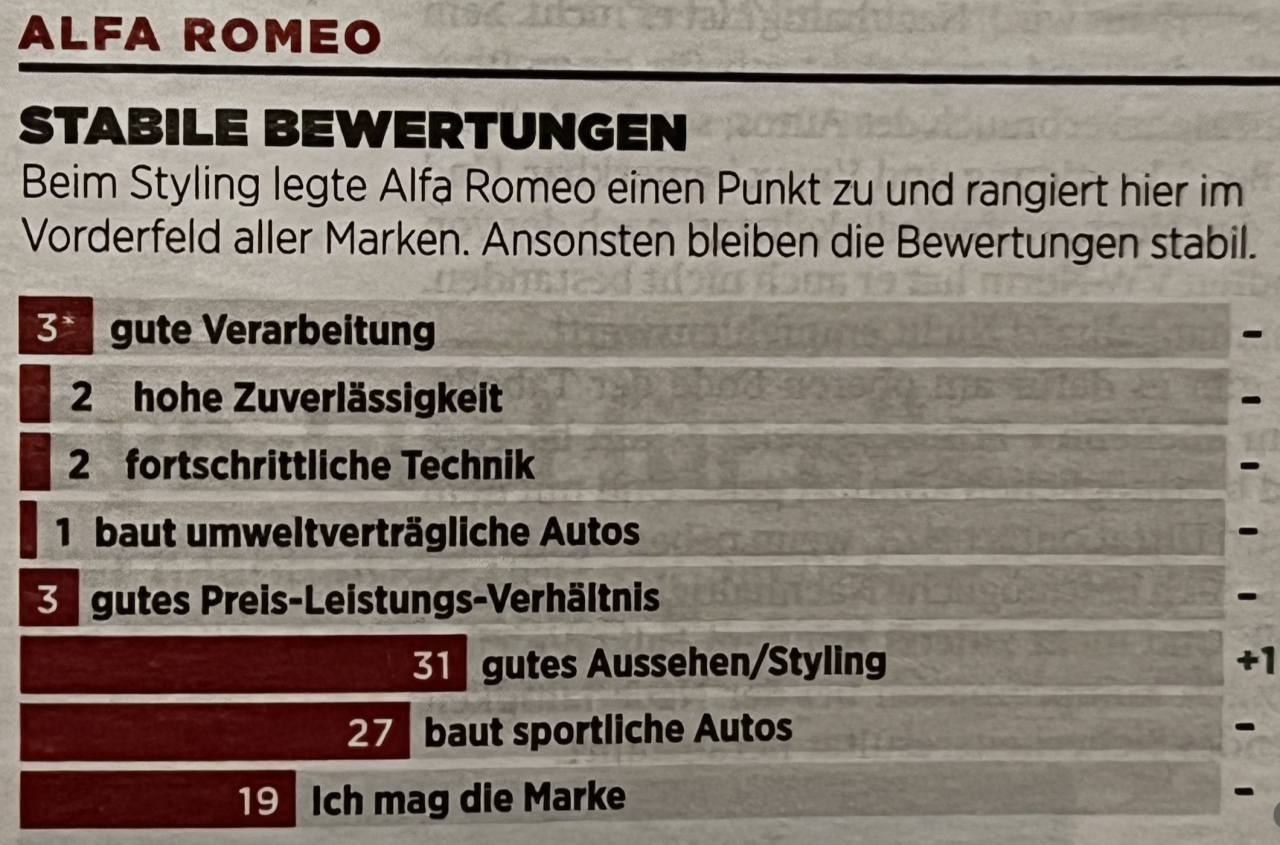
Esatto…elezione „Auto Motor&Sport Best car 2025“, 95.500 partecipanti, analisi delle categorie per marca, si vede che il disegno e sicuramente l’ultima dei problemi che una Alfa ha in Germania…..
-
-
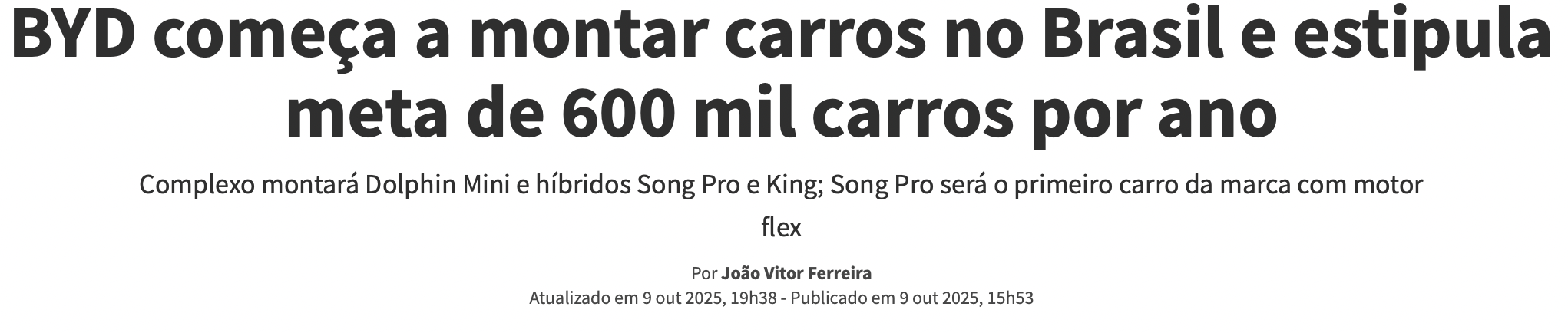
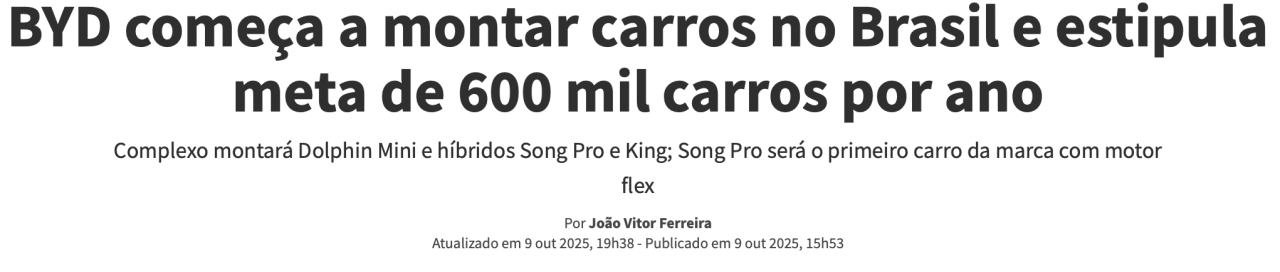
…..Questo è già il primo errore di valutazione….. "…..Outro projeto brasileiro da BYD é o motor 1.5 híbrido plug-in flex, desenvolvido em parceria entre equipes do Brasil e da China…." https://quatrorodas.abril.com.br/carros-eletricos/byd-comeca-a-montar-carros-no-brasil-e-estipula-meta-de-600-mil-carros-por-ano/
-
-
Per quale senso?? Per spingwre le vendite di B-Suv a 3 cilindri? Proprio questa confusione impedisce la formazione di un profilo del marchio. Nessuno sa cosa voglia realmente rappresentare Alfa, il DNA del marchio rimane nebuloso e indefinito.
-
Esatto. Questo segmento per Usa e il segmento centrale e poi - quale cliente reale in Europa (non i wannabe al bar) interessa, che una X5 e prodotto a South Carolina? Nessuno e per il mercato attuale in Usa for make it great again questo fatto e comunque un vantaggio.
-
-
I ramp up veloci non controllati di Stellantis sono già la prima parte del fallimento.
-
BMW Group launches demo fleet for diesel replacement fuels22.10.2025 PRESS RELEASE+++ BMW Group demands: HVO100-only vehicles to be included in fleet legislation +++ Proof of alternative fuels in demo fleet now possible +++ Since 2025: BMW diesel ex-works with HVO100 +++ Luxembourg / Munich. The BMW Group is using its presence at the "Fleet Europe Days" on 22 and 23 October in Luxembourg to show fleet operators ways to decarbonise their fleets. In addition to fully electrified vehicles, the focus will be on fuels based on renewable raw materials. Their advantage: the potential to save CO2. With more than 250 million existing vehicles in Europe, their CO2 footprint can be improved if the proportion of renewable fuels is increased. A new technical solution used by the BMW Group is proof that all BMW diesels in a fleet are fuelled exclusively with HVO100. Refuelling data from the vehicle is compared with data from the fleet operator's payment system. This means that the fuel used by the vehicle can be traced seamlessly. An important step towards an "HVO100 only fleet" for fleet customers. Dr. Martin Kaufmann, Head of Powertrain Development at the BMW Group: "Our goal is always to have more environmentally friendly and efficient vehicles on the road. With the diesel replacement fuel HVO100, we have an opportunity to reduce the CO2 footprint of vehicle fleets. Especially in the area of fuels that are not based on fossil fuels, we see a potential that we are ready to realise.” Bernhard Kuhnt, Head of Sales Region Europe, BMW Group: "Fleet customers are extremely important for sales in Europe and at the same time diesel remains a very good powertrain technology for many fleets. The use of HVO100 offers a way to quickly reduce CO2 emissions that takes into account individual use cases - whether driving long distances or towing a trailer - and can thus help our fleet customers reduce their CO2 footprint." Initial contractual agreements with the operators of large BMW diesel fleets in Germany and Italy are imminent. These test fleets, together with the internal BMW Group fleet that has already been launched, will provide important data and findings for the further improvement of the technical solution. HVO100 used in the first fuelling of all diesel produced in Germany Since January 2025, all diesel models produced in Germany are being fuelled with HVO100 before delivery to dealers. This step underlines BMW's commitment to making decarbonisation possible and achievable today. The abbreviation HVO stands for 'Hydrotreated Vegetable Oil' and the suffix '100' indicates that it is filled with 100 per cent pure fuel. "Neste MY Renewable Diesel™" HVO100 is used at the BMW Group plants in Munich, Dingolfing, Regensburg and Leipzig. The fuel from Finnish manufacturer Neste enables a CO2e reduction of up to 90 per cent ("well to wheel") compared to fossil diesel. The initial filling at the plants before delivery to the BMW Group dealer organisation is five to eight litres, depending on the model. For the BMW Group, technological openness is a top priority. "Options instead of bans" is its motto. The company continues to invest in a broad portfolio - from battery electric vehicles, plug-in hybrids and hydrogen fuel cells to highly efficient combustion engines that can run on renewable fuels. The BMW Group has long approved its vehicles for a variety of renewable fuels - including HVO100, B10 and eFuels according to the EN590 standard for diesel engines, and E25 and eFuels according to the EN228 standard for petrol engines. Regulatory framework conditions must catch up Regulation must catch up. To accelerate the uptake of renewable fuels across the market, the BMW Group is calling for an ambitious implementation of the Renewable Energy Directive (RED III), including national quotas that require at least a 30% reduction in greenhouse gas emissions from fuels, to be transposed into national law by 2025. Dr. Thomas Becker, Head of Policy, External Relations and Sustainability at the BMW Group, says: "The BMW Group demands that every measure to reduce CO2 emissions is taken into account at every stage of a vehicle's life cycle. This also includes the use of renewable fuels - especially for vehicles that primarily run on CO2-neutral fuel (CNF). These must be formally recognised in EU fleet legislation. The fuels are available, what we need now is a pragmatic and quickly implementable regulation that enables companies to develop innovations and make them marketable." (BMW Group)
-
-
-
-
Non necessariamente: come è consuetudine oggi nel mondo finanziario e delle grandi aziende, si separa la parte più produttiva dal resto meno produttivo per rendere la prima più attraente in borsa. Secondo questa logica, si potrebbe quotare in borsa la parte redditizia statunitense e lasciare che i due morti a piedi, Fiat e Peugeot, continuino a operare insieme in Europa.
-
-
-
…………… Secondo Tavares, Stellantis sta attraversando una fase complessa segnata da un calo della domanda nei mercati occidentali, dalla crescente pressione dei costruttori cinesi e da tensioni geopolitiche che condizionano le strategie industriali dei grandi gruppi automobilistici............ ...........Tra i vari scenari prospettati, Tavares non ha escluso la possibilità di una scissione tra le divisioni europee e statunitensi del gruppo. In tale scenario, Stellantis potrebbe decidere di ridefinire la propria presenza globale seguendo logiche di mercato più mirate. Ad esempio, le attività americane (quindi Chrysler, Ram, Jeepe Dodge) tornerebbero a concentrarsi sul Nord America, mentre le operazioni europee marchi come Fiat, Alfa Romeo, Lancia e Maserati potrebbero finire sotto il controllo di un costruttore cinese, interessato a rafforzare la propria presenza nel Vecchio Continente. Una strategia che ricorderebbe, almeno in parte, quella intrapresa da General Motors negli ultimi anni, con un progressivo disimpegno dai mercati meno redditizi………..
-
Versione AMG con possibile 700kW….. Mercedes GLC AMG EQ mit sensationellen 952 PS (AM&S)